

News
Loading workspace…
News
Live momentum
 InstitutionalOct 24, 2026Solana ETFs Post Record Weekly Outflows as Ten-Day Losing Streak ContinuesSpot Solana ETF products recorded their worst weekly outflow total on record, while the funds’ extended redemptions coincided with renewed pressure on SOL’s price.
 InstitutionalOct 24, 2026Securitize Lists Apple, Nvidia and Tesla Tokens on Solana PlatformSecuritize is expanding regulated, on-chain access to U.S. equities by listing 12 stock-backed security-entitlement tokens on its Solana-based platform.
 InstitutionalOct 23, 2026Birdeye Launches Peak Institutional Market Terminal for Digital-Asset AllocatorsBirdeye’s new Peak terminal combines onchain and offchain intelligence, portfolio analytics and research tools for institutions allocating capital across digital assets.
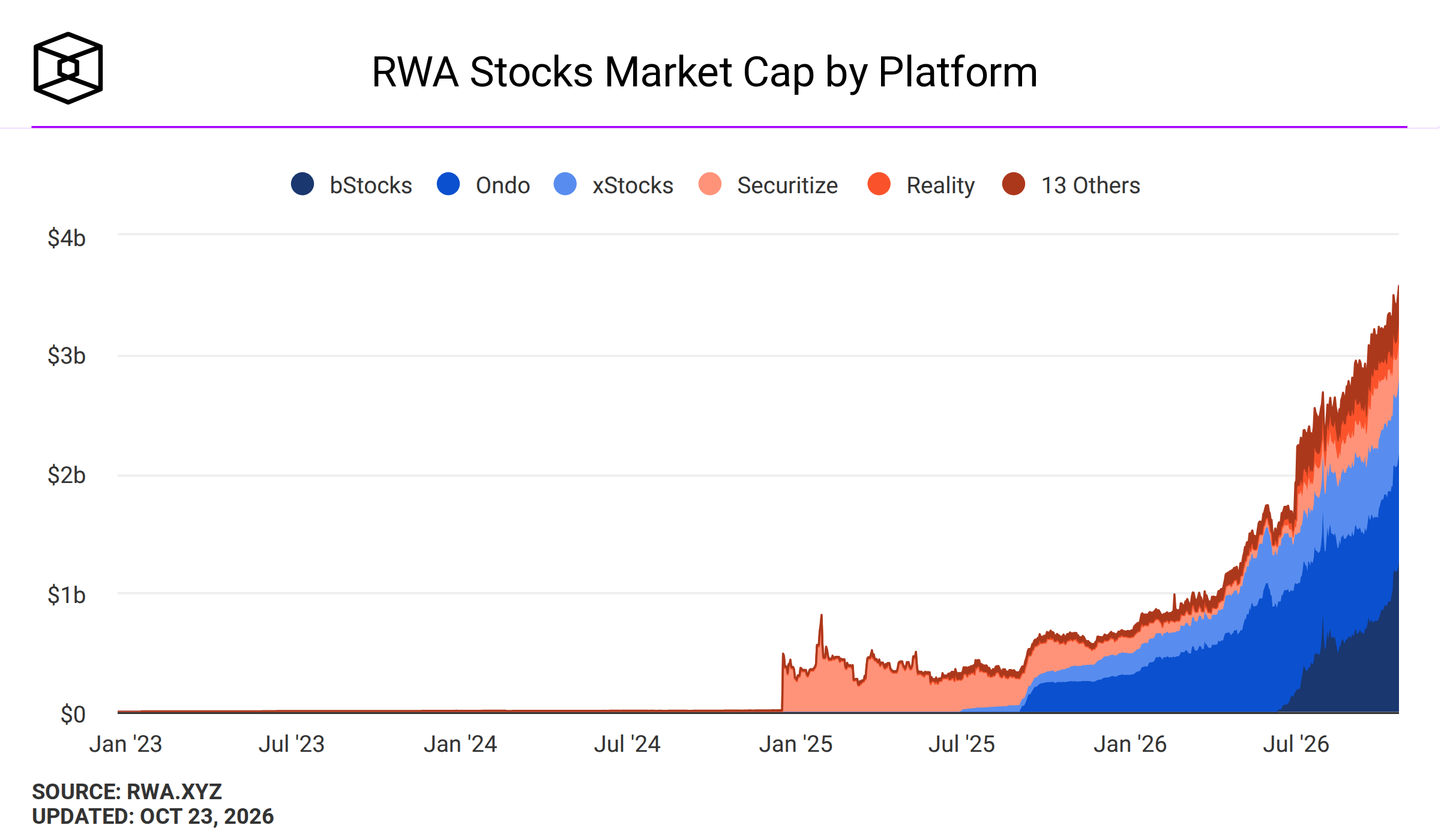 MarketsOct 23, 2026Tokenized Stock Market Tops $3.5B Across Leading Platforms, The Block Data ShowsThe Block’s RWA data ranks bStocks, Ondo and xStocks as the largest platforms by tokenized stock market capitalization, highlighting a fragmented but sizable market for blockchain-based exposure to traditional equities.
 DeFiOct 23, 2026Circle Mints Approximately $3.75 Billion in USDC on Solana in One WeekCircle reportedly issued about $3.75 billion in USDC on Solana over seven days, highlighting the network’s growing role in stablecoin liquidity and activity.
 DeFiOct 23, 2026Reflect Money Launches Create for Custom Yield-Bearing Stablecoins on SolanaReflect Money’s new Create tool lets users and applications deploy custom yield-bearing stablecoins on Solana in a single transaction, with built-in trading and redemption infrastructure.
 InstitutionalOct 23, 2026Solana's VIDA token outtrades its own stock by 248%Tokenized shares of Vida Global traded 248% more volume than the company’s NYSE American-listed stock over a 30-day period, highlighting Solana’s growing role in equity markets.MarketsOct 23, 2026Dune launches onchain trading data feeds as tokenized markets expandDune’s new real-time feeds cover more than 200 onchain venues across 12 networks, including Solana, as institutional demand for tokenized markets grows.
 InstitutionalOct 23, 2026JPMorgan’s Tokenized Money Market Funds Go Live on SolanaJPMorgan Asset Management has launched two tokenized money market funds on Solana for qualified U.S. investors, expanding the bank’s blockchain-based investment products beyond Ethereum.Infrastructure & CultureOct 22, 2026Solana Activates Alpenglow, Cutting Transaction Finality to 150 MillisecondsSolana’s Alpenglow consensus upgrade is now live, replacing TowerBFT and sharply reducing the time required for transactions to become final on the network.
 MarketsOct 22, 2026Solana Records $5 Trillion in Stablecoin Volume in 2026Solana has processed $5 trillion in stablecoin volume through Oct. 22, with transfer activity accelerating despite a slight decline in supply from September’s record.InstitutionalOct 22, 2026SkyAI sells entire Solana treasury to fund $201 million buybackThe former Sharps Technology has exited its SOL treasury strategy, retaining about $223.8 million in cash before a proposed share and warrant repurchase.
 MarketsOct 22, 2026Tokenized Equities Fuel RWA Growth as Solana Gains Ground, ARK SaysTokenized stocks grew 86% in the third quarter, while Solana roughly tripled its real-world asset value year to date as activity broadened beyond Ethereum.InstitutionalOct 22, 2026Grayscale Expands In-Kind Subscriptions to 10 Crypto ETFs and TrustsGrayscale is allowing eligible investors to contribute digital assets directly in exchange for shares across 10 investment products, including its Solana fund, with minimums ranging from about $80,300 to $364,800.
 MarketsOct 22, 2026Solana Overtakes Robinhood Chain in Tokenized-Stock HoldersSolana now accounts for 28.3% of tokenized-stock holders across 18 blockchains, narrowly surpassing Robinhood Chain as activity expands across on-chain equity markets.Infrastructure & CultureOct 22, 2026Anza’s Alpenglow Goes Live on Solana, Cutting Finality to 150 MillisecondsSolana validators have activated Anza’s Alpenglow consensus protocol, replacing TowerBFT and reducing transaction finality from about 12.8 seconds to approximately 150 milliseconds.
 MarketsOct 21, 2026RWA Chain Diversity Expands as Solana Gains Ground Against EthereumEthereum remains the leading home for real-world assets, but Solana and other competing networks are capturing a larger share as tokenization becomes more competitive and adoption-focused.
 DeFiOct 21, 2026Tokenized Circle Stock in DeFi Climbs to $7.7 MillionTokenized shares of Circle Internet Group are increasingly being used for liquidity, lending and trading across Solana and Ethereum, with DeFi deposits more than doubling since August.
 MarketsOct 21, 2026Solana Price Faces New Risk Despite Growing On-Chain AdoptionSOL has pulled back roughly 15% from its late-September high as ETF outflows raise downside risks, even while tokenized assets and stock ownership on Solana continue to expand.
 InstitutionalOct 21, 2026Upexi Positions 2.3 Million SOL Treasury as Long-Term Corporate BetUpexi says its Solana treasury strategy combines staking, discounted locked-token purchases and balance-sheet discipline as it targets wider institutional adoption over the next three to five years.