





Solana co-founder tells firms opposing tokenized stocks to go private
An SEC-approved five-year experiment is opening US equity markets to on-chain trading, even as more than 30 companies object to tokenized versions of their shares.
Solana co-founder Anatoly Yakovenko has pushed back against US companies opposing tokenized stock trading, arguing that firms unwilling to participate in public, on-chain markets should consider going private. His comments come as demand for tokenized equities accelerates across crypto venues and on Solana.
A five-year experiment with an opt-out clause
The dispute began on September 17, 2026, when the SEC granted an innovation exemption allowing venues to offer on-chain trading of US equities. The exemption establishes a temporary, five-year framework for testing tokenized stock markets.
Under the rules, venues must notify stock issuers before listing tokenized versions of their shares. Companies then receive a 30-day objection period to raise concerns about the proposed listings.
More than 30 companies had formally objected to tokenized versions of their shares by late October. The objectors include some of the largest names in corporate America:
- Goldman Sachs
- Microsoft
- Alphabet
- McDonald’s
The objections have become particularly visible on OKXICE, a joint venture between the parent company of the NYSE and crypto exchange OKX. The platform has publicly disclosed complaints from multiple issuers over the tokenization of their stock.
Yakovenko’s response frames the disagreement as a question of market access and corporate choice. If public companies oppose a system that allows their shares to trade in tokenized form, his position is that they should consider leaving public markets rather than blocking the technology.
Volume keeps rising anyway
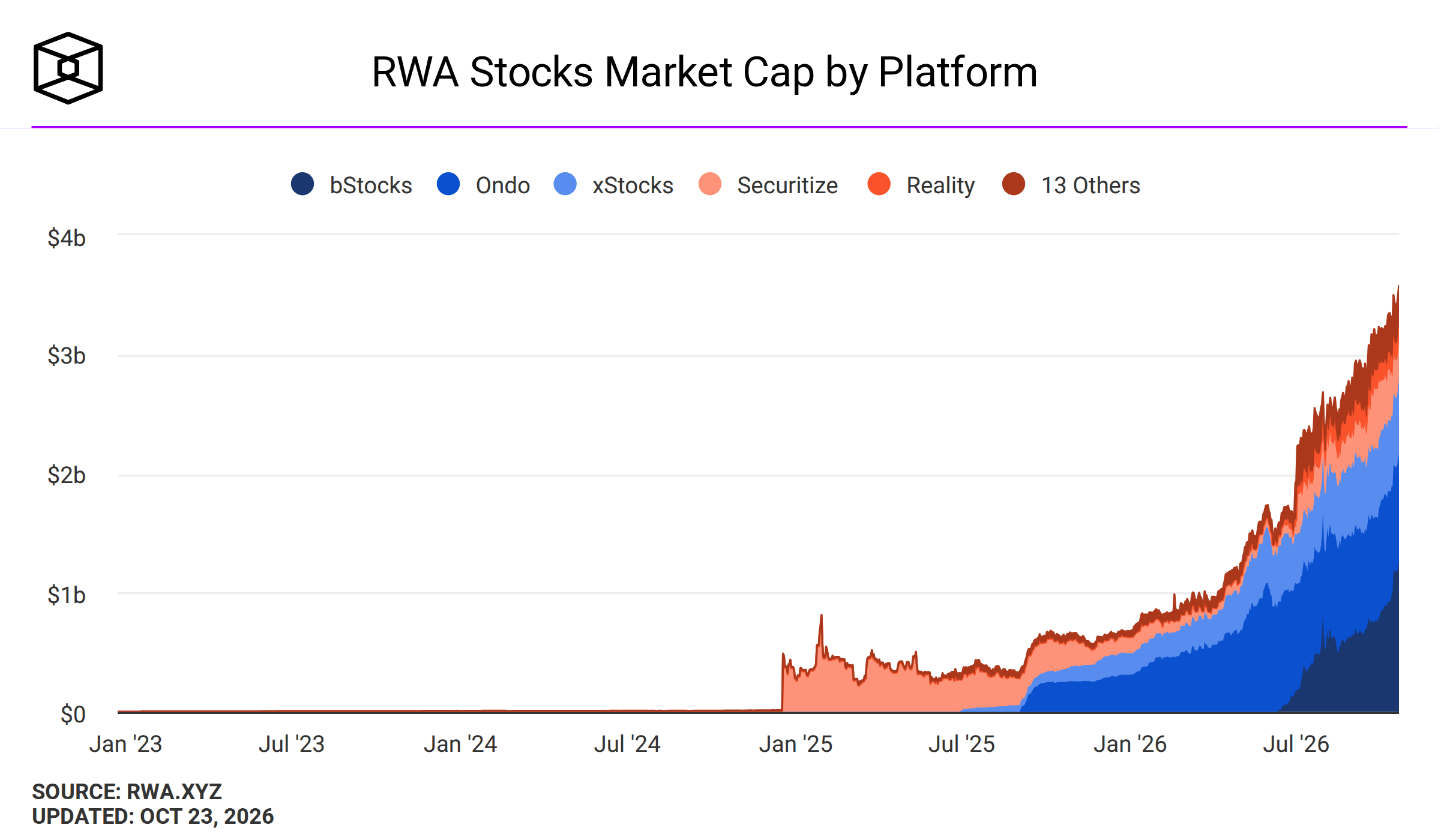
Corporate resistance has not stopped traders from using tokenized-equity products. On Robinhood Chain, tokenized stock trading volume reached $11.31 billion in September 2026, up sharply from $526 million in July.
That growth represents more than a short-term increase in activity. It suggests that traders are responding to the ability to access equity exposure through blockchain-based venues, regardless of whether every issuer supports the model.
Solana is experiencing a similar shift. Tokenized equities have become the network’s fastest-growing category, placing the sector at the center of the ecosystem’s institutional and market-structure ambitions.
What This Means
The conflict is becoming a test of whether tokenized securities will be treated as an optional product controlled by issuers or as a broader evolution in how public-market access works. The SEC’s five-year framework provides a legal testing ground, while rising trading volumes give platforms an incentive to continue building.
For Solana, the growth of tokenized equities could attract more institutional liquidity, trading infrastructure and financial applications. However, issuer objections remain a meaningful regulatory and commercial obstacle. The outcome may depend on whether on-chain venues can demonstrate strong investor protections and market integrity while convincing companies that tokenization can expand access without undermining their control.